

Appearance
How to Install QGIS
Navigate to the
 QGIS Download page
Find the appropriate installer for your operating system.
For Windows users, we recommend downloading a standalone MSI installer for the long term release.
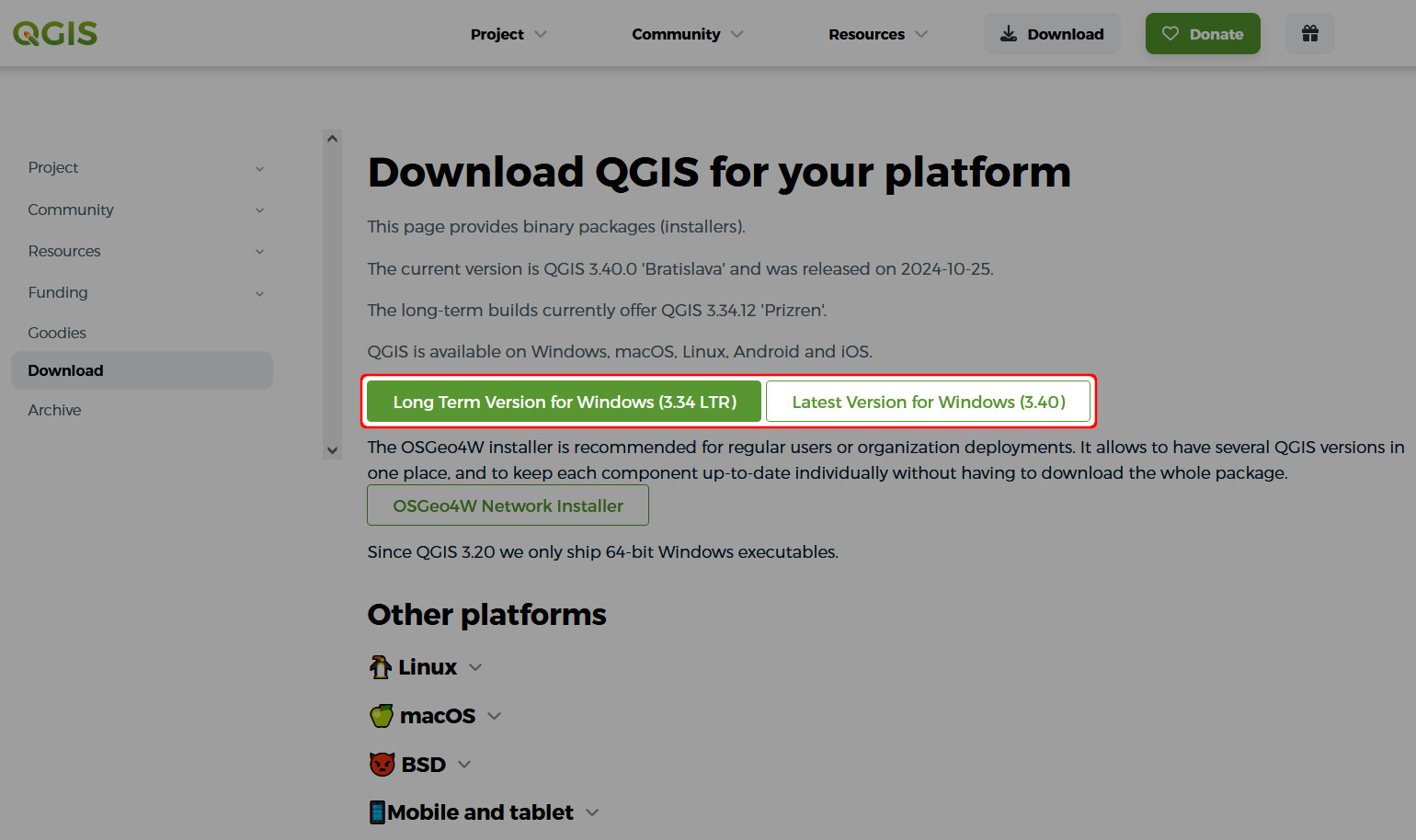
Choosing QGIS installer and version
The
Installation Guide contains more details about installation options for different platforms.The download page offers two QGIS versions: long term and latest. The long term release (LTR) is more stable, while the latest version can have more functionality.
Run the installer when it has finished downloading:
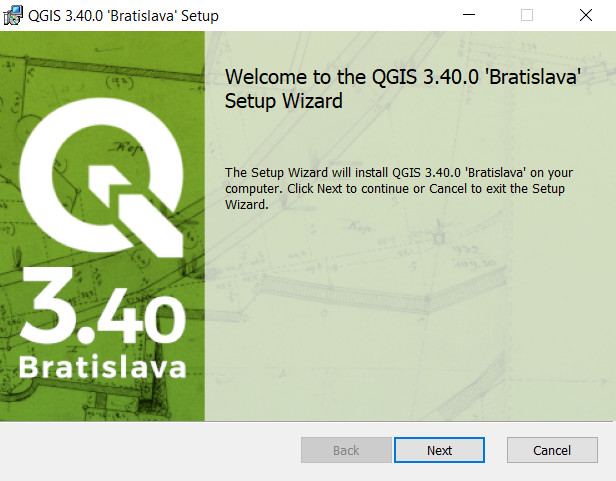
Continue the installation using the default installation options.
QGIS should now be installed on your computer.
TIP
QGIS is a powerful tool with a great community that can help you achieve a lot.
We recommend using QGIS User Guide and QGIS Training Manual to get familiar with QGIS and its functionality.
QGIS 4 and QGIS 3 compatibility: what to check before upgrading
QGIS 4 stores some settings, such as the map canvas CRS, in a format QGIS 3 cannot read. In QGIS 3 these appear as unset. The same applies to settings from our QGIS plugin: options you enable in QGIS 4, like map sketching, custom photo naming or position tracking, will show as disabled when the project is opened in QGIS 3. The compatibility goes one way only. QGIS 4 reads entries written by QGIS 3, but not the other way round.
This affects QGIS desktop only. The Mergin Maps mobile app reads these entries correctly, whether they were set in QGIS 3 or QGIS 4.
What we recommend
- Make sure everyone on your team who works in QGIS uses the same major version, either QGIS 4 or QGIS 3.
- If you're migrating to QGIS 4, migrate the whole team at the same time. That avoids the problem entirely.